The Fiat 124 Spider: Italian Engineering, Groningen No-Nonsense and Pure Driving Pleasure
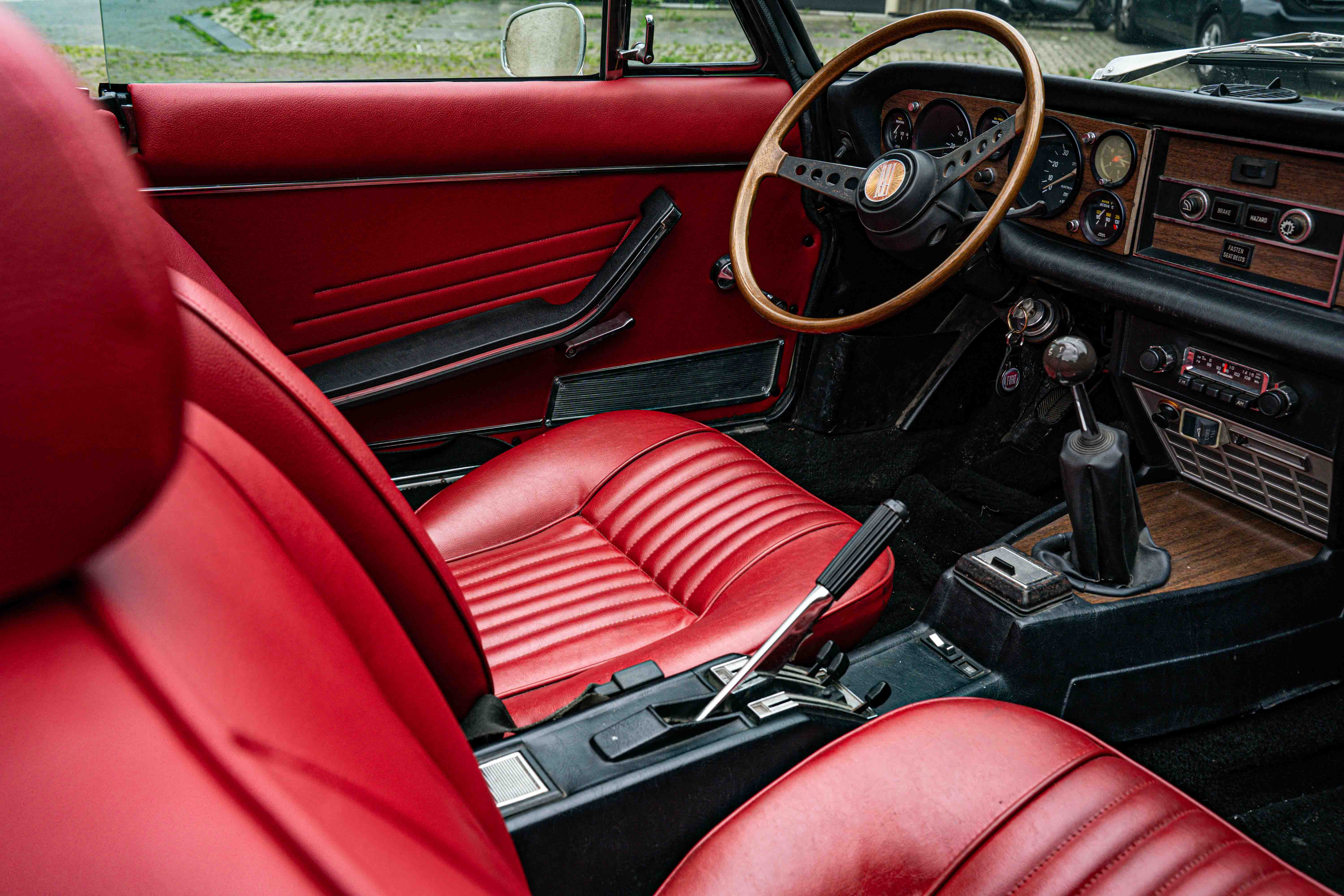
Close your eyes for just a moment. Forget the marketing talk about ‘freedom’ and ‘happiness’. Think mechanics. You sit low to the ground. You turn the key and the rev counter needle flicks up. No humming electric motor, but a raw, metallic burble. The scent is a mix of old leather, a hint of petrol, and the summery Groningen countryside.
You downshift for a corner. Not with two fingers, but with a determined movement of your hand. The gear lever clicks into place. The engine barks briefly, you turn in, the car settles, and you feed in the throttle. You’re not just driving along the Reitdiep; you’re working. And that’s exactly the point. At Tonny’s Classic Drive we believe driving a classic isn’t a passive activity. It’s interaction between human and machine. And there are few machines that reward that interaction like the Fiat 124 Sport Spider. In this article we go beyond the surface. We go deep. We analyze the brilliant engineering of Aurelio Lampredi, unravel the complex history of this model, and explain why this particular Italian, with all of its temperament, is the perfect partner for Groningen’s borgen, wierden and dikes.
An Icon Born from Pencil and Passion (1966)
To understand why the Fiat 124 Spider still turns heads, we have to go back to Turin in the 1960s. The automotive world was in transition. While the British (MG, Triumph, Austin-Healey) dominated the market with their charming, but technically often archaic roadsters, the Italians decided to raise the bar.
The Master’s Hand: Tom Tjaarda & Pininfarina
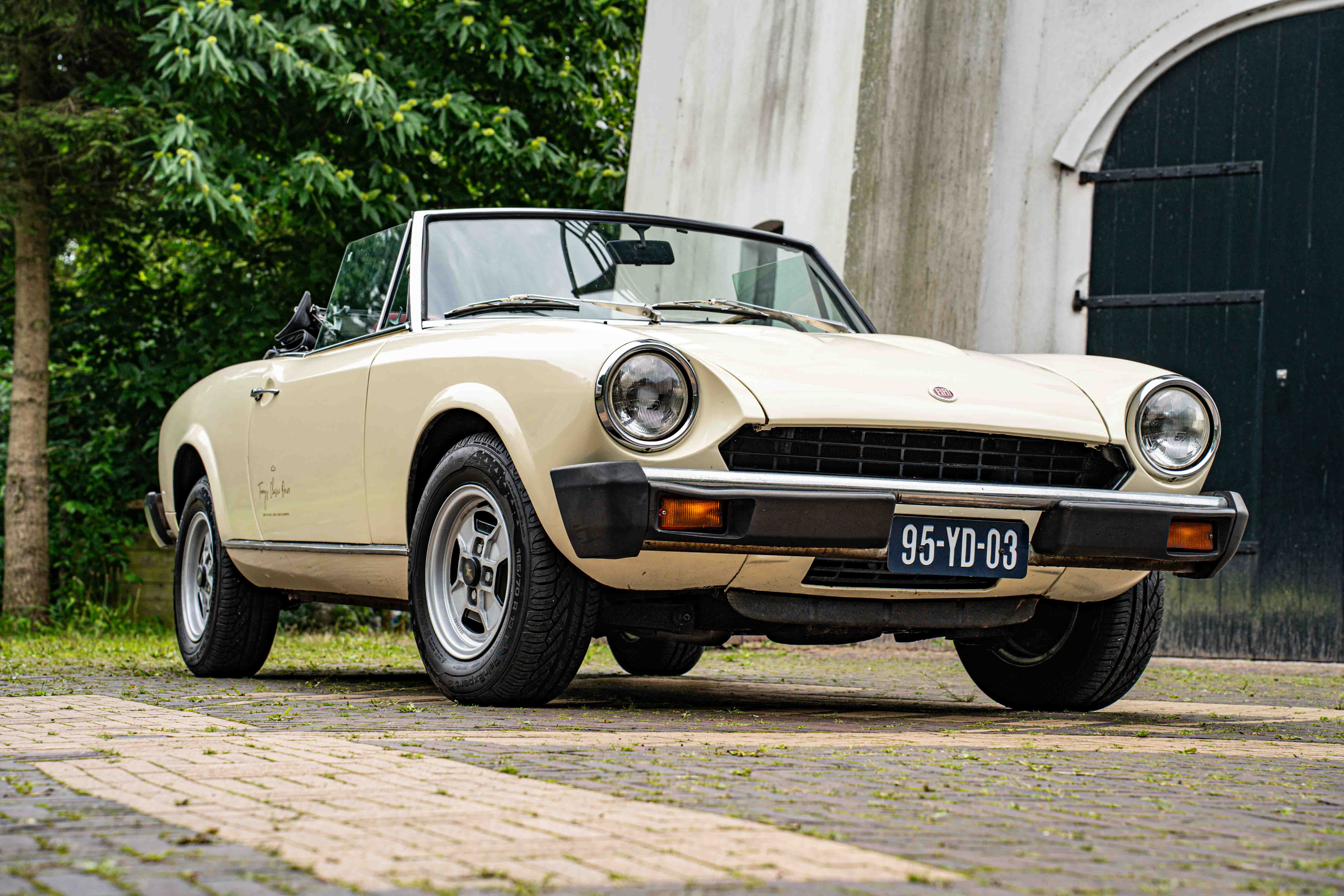
The 124 Spider wasn’t ‘designed’—it was sculpted. The lines came from the drawing board of Tom Tjaarda, an American-born designer with Dutch roots. Tjaarda (1934 - 2017) worked at the time for Carrozzeria Pininfarina, the house also responsible for some of the most beautiful Ferraris. When the car was unveiled in November 1966 at the Turin Motor Show, the contrast with the competition was striking. Where others went for boxy or overly rounded shapes, Tjaarda drew a masterpiece of balance:
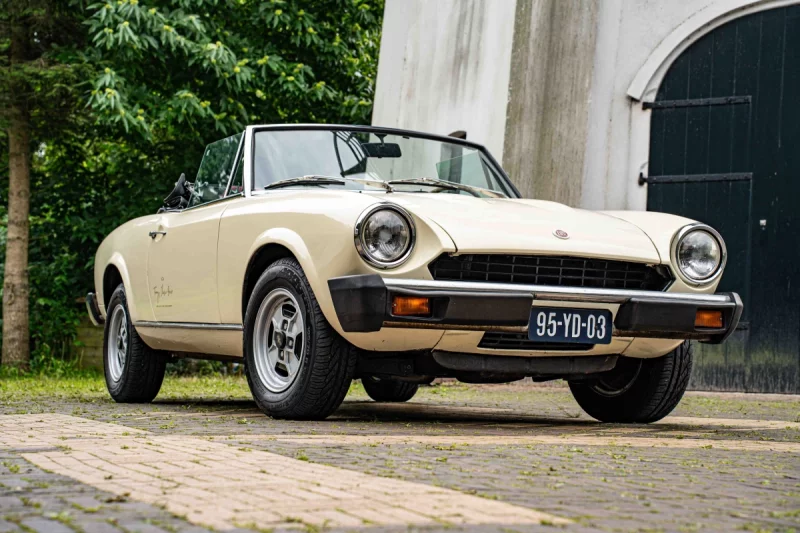
- The nose: Low and wide, with those classic round headlights and a hexagonal grille that radiates confidence.
- The flanks: The subtle ‘hip line’ flowing over the rear wheel (the coke bottle line) is directly inspired by Tjaarda’s earlier concept sketches for the Chevrolet Corvette Rondine.
- The rear: The distinctive little ‘wings’ at the back are no accident; they give the car a sense of speed, even when it’s standing still at the traffic lights in Appingedam.
The design is mathematically right. No unnecessary frills, no pointless chrome—just pure, timeless lines that barely needed changing in the decades that followed.
More Than a Pretty Face
But don’t be fooled by the elegant bodywork. The Spider wasn’t a show pony. Under the hood was technology that was advanced for this market segment. Many sports cars in 1966 still relied on pre-war engineering: live rear axles and drum brakes were the norm.
Fiat did things differently. The Spider stood out with advanced engineering. The vast majority of models featured disc brakes all round (a safety revolution at the time, when competitors often still fitted drums). Fiat also offered a five-speed gearbox early on—something that became virtually standard on the later BS and CS series, while drivers of English roadsters often had to pay extra for an ‘overdrive’ on their four-speed. The result was a car that wasn’t just beautiful to look at, but one that could truly hold its own technically.
The Beating Heart: The Lampredi Twin-Cam (Fiat 124 Spider)
At Tonny’s Classic Drive we often hear it from guests handing back the keys: "That engine... it really goes, doesn’t it?" That’s putting it mildly. That distinctive sound and eagerness are the signature of one man: Aurelio Lampredi.
Lampredi wasn’t an ordinary engineer. Before he joined Fiat, he designed the V12 engines with which Ferrari won its first Formula 1 world championships. When he made the switch to Fiat, he brought that racing philosophy to the production line.
For the 124 Spider (and the Coupé) he developed a four-cylinder engine with double overhead camshafts (DOHC). Today that’s standard, but in the 1960s a ‘Twin Cam’ was usually reserved for exotica like Alfa Romeo and Jaguar.
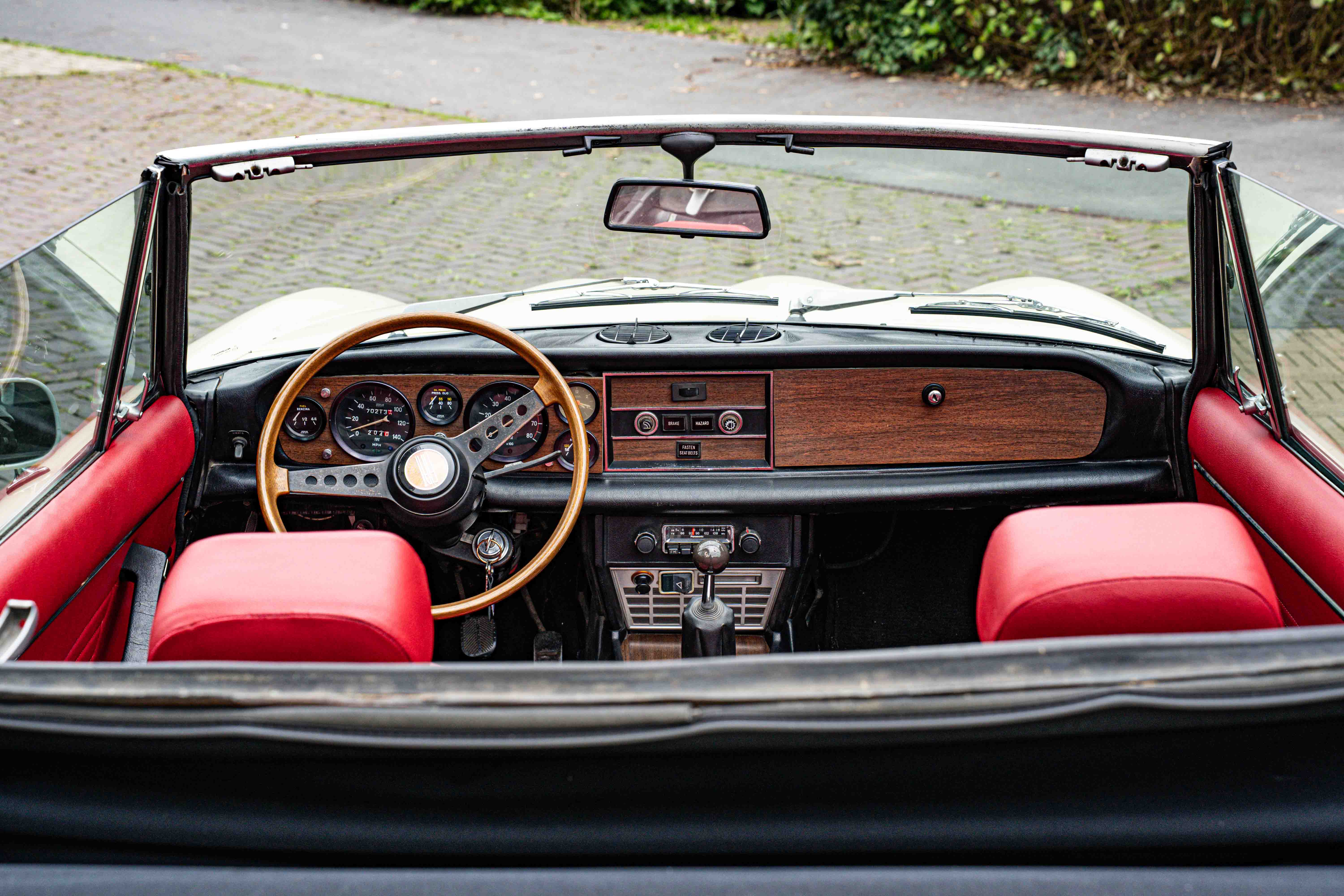
Why is this engine legendary?
The Lampredi engine is regarded by enthusiasts as one of the most influential four-cylinders in history. Innovative maintenance: Lampredi devised a brilliant system that allowed the valves to be adjusted via shims above the tappets, without removing the camshafts. This made the engine not only powerful, but also more maintenance-friendly than many contemporaries.
Character: It’s a ‘square’ engine (bore and stroke are almost equal), which delivers a crisp throttle response. It loves to rev and invites you to keep it on the boil.
The Legacy: The architecture of this engine proved so robust that it became the basis for the engines of fast Fiats and Lancias well into the 1990s. It’s this same basic design—the ‘Lampredi bloodline’—that was ultimately further developed into the power unit of the Lancia Delta Integrale, the car that dominated the rally world for years.
So when you tour through the Groningen landscape in the Spider, you’re effectively driving with engineering that helped give birth to a rally dynasty. You feel that every time you press the throttle.
The Evolution of a Survivor: Fiat 124 Spider (1966 – 1985)
The Fiat 124 Spider had an incredibly long life. For nearly twenty years it rolled off the production line, with a total of almost 200,000 examples built. It survived oil crises, changing safety regulations, and the whims of fashion.
For the enthusiast, it’s crucial to know the differences, because a Spider from 1968 drives fundamentally differently from one from 1982.
The Original Spider (AS Series: 1966-1969)
The purest form. Equipped with a 1438cc engine (90 hp) and, in the very first models, a driveshaft in a tube (torque tube). They’re recognizable by the small rear lights, thin bumpers, and the absence of ‘bulges’ on the hood. By now they’re rare, delicate, and loved for their simplicity.
The Powerhouses (BS and CS Series: 1970-1978)
In the 1970s the market demanded more power. Fiat introduced the 1608cc and later the 1800cc engines. Identification: The hood gained the distinctive ‘power domes’ (bulges). This wasn’t an aesthetic choice, but a necessity: the larger engine was simply taller.
Abarth Rally (CSA): In 1972 the holy grail appeared: the Abarth version for homologation in rallying. With independent rear suspension, lightweight panels, and more horsepower. Although the standard Spider kept its live rear axle, the image benefited enormously from the rally successes Abarth achieved. The golden middle ground: For many, the models from the early 1970s (BS1 and early CS) are the perfect mix: classic looks (chrome!), but with the more powerful engines and often improved suspension.
The Spider 2000 & The American Exile (1979-1982)
Success in America was so great that Fiat made a drastic decision in the late 1970s: the Spider’s focus shifted entirely to export. Production largely went to the US. These later models, the ‘Spider 2000’, received a 2.0-liter engine, often fitted with fuel injection from 1980 to meet strict emissions requirements.
The downside: US legislation demanded heavy, thick bumpers and a higher ride height. This slightly detracted from Tjaarda’s pure lines.
The upside: The injected engines start more reliably and idle beautifully, something that older carbureted versions can require careful tuning to achieve.